
-
Is 21st century poverty real?
If you think about poverty in the UK you might picture Victorian workhouses, the slums of the 1930s, or the dole queues of the 1980s. After all, we’re in the 21st century now – everyone has a smartphone and a high quality of life. But beneath the veneer of national prosperity lies the distasteful fact that a fifth of people in the UK are in poverty.
We’re used to being told that people in the UK aren’t really in poverty: that they’re just not working hard enough, or trying hard enough. That poor people are feckless and unable to budget, that their suffering is their own fault. But government figures for the financial year 2019/20201 (the most recent year with published data at the time of writing) shows that 22% of the UK population lives below the poverty line after paying housing costs – that’s 14.5 million people. Can they really all be to blame for the inadequacy of their income? Almost a third of children in the UK live in poverty, almost a fifth of pensioners, and more than a quarter of the households where someone has a disability – is that really because of a failure to budget? Or is something else going on?
I’ve lived in poverty. I know many people who still do. I’m not writing this blog for fun, or for money, but because I believe that the facts about poverty in the UK need to be shouted from the rooftops. There are many myths and sensationalist stories as well as misinformation and ignorance, and I want to cut through all that to the truth that lies beneath.
-
Does work pay?
“Making work pay” is a popular phrase in UK politics, but it’s rarely clear exactly what it means. Making employers pay higher wages? Making people work more hours? Making welfare payments less? So I’d like to have a brief look at rates of pay in the UK for full-time work (which the government defines as a minimum of 35 hours a week), and how they compare to the average wage and the minimum income standard.
According to research by the Joseph Rowntree Foundation and Loughborough University, the minimum income standard for a single person in 2021 was £20,400 a year. For a couple with two children it was £34,200 between them. How does this compare with UK minimum rates of pay1? Not well, I’m afraid:
- aged 23 or over: £16,216 per year (due to rise to £17,290 in April 2022)
- aged 21 or 22: £15,215 per year (due to rise to £16,708 in April 2022)
- aged 18 to 20: £11,939 per year (due to rise to £12,431 in April 2022)
- under 18: £8,408 per year (due to rise to £8,754 in April 2022)
- apprentice aged 19 or under: £7,826 per year (due to rise to £8,754 in April 2021)
The UK government calls the national minimum wage for people aged 23 and over a National Living Wage, but as you can see it doesn’t come close to the minimum income standard.
Then there’s the benefits cap. This is the upper limit of welfare payments you can receive in any one year, unless you meet certain requirements. So if, for example, you’re a single adult living alone outside the greater London area, the maximum amount of welfare payments you are permitted to receive is £13,400 per year2. That might not be too bad if you have wages as well, whether part-time or full-time, but if you’re unemployed you’re going to struggle. If you’re a single parent who lives with their children, or if you’re in a couple, the maximum amount is £20,000 per year, which is still nowhere near enough if that’s your only income.
-
What is poverty?
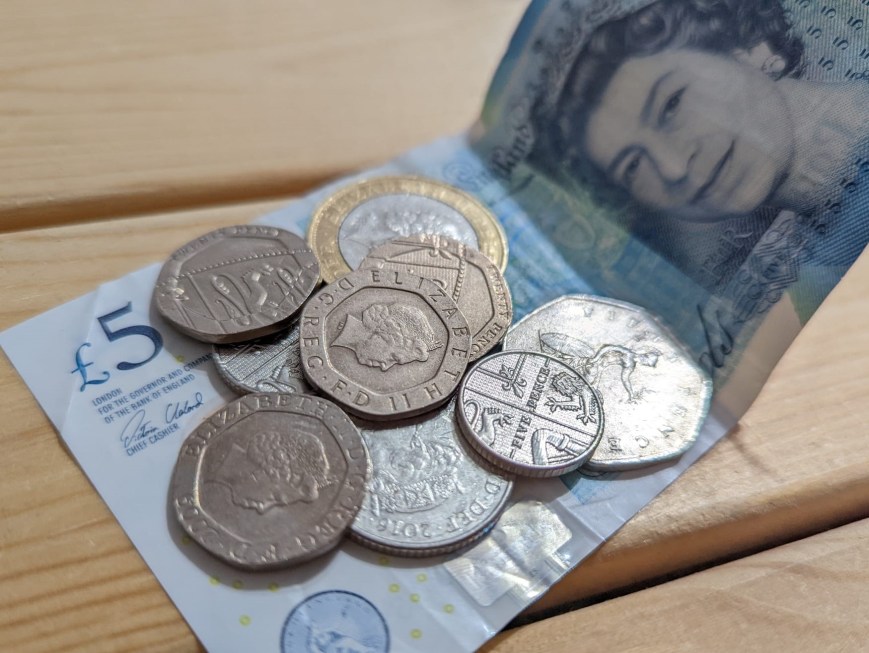
The UK is one of the richest countries in the world, and it can be hard to imagine that there could be any real poverty here. There’s no doubt that there is poverty, but how much there is can vary depending what measures are used. (Don’t worry – I’m not going to start spouting statistical terminology and ask you to remember your high school maths!). Every year the UK government publishes data about households with below average income (HBAI). The average income is the median average – if you ranked all incomes in order from biggest to smallest, the median would be the one in the middle. Nice and simple, right? Where the household income is less than 60% of the UK median average, that household is deemed to be in poverty. With me so far? Good.
So let’s take a stroll through the most common measures of poverty, and see what their strengths and weaknesses are.
Absolute poverty
In the UK, this is defined as having a household income below 60% of the median average as it was in 2011. One advantage of this approach is that it gives a standard figure to measure against – it doesn’t change year to year, and it means that poverty can be measured against a particular standard. Unfortunately the value of money changes as time passes, and inflation means that something that cost £10 in 2011 would have cost £12.46 in 20201. This means that the same amount of money will buy less as time goes on, and this is why absolute poverty figures tend to underestimate the extent of the problem.
Relative poverty
This is defined as having a household income below 60% of the median average from the same year. So instead of measuring 2018 household income against the 2011 median as you would with absolute poverty, it’s measured against the 2018 median; 2019 is measured against the 2019 median, and so on. This means that as the average income moves, the poverty line moves with it. This is seen as both its strength and its weakness – some people feel that constantly changing (and usually increasing) the income level where poverty begins is misleading.
Minimum income standard
This is a way of measuring poverty according to what the UK public believes is required to have the minimum socially acceptable standard of living:
“A minimum standard of living in the UK today includes, but is more than just, food, clothes and shelter. It is about having what you need in order to have the opportunities and choices necessary to participate in society”2.
Although the minimum income standard (MIS) isn’t strictly speaking a way of measuring poverty, it’s worth noting that most households below the poverty line do not reach this standard. Critics of the MIS point out that it includes such non-essential items as birthday gifts for others, and leisure activities, rather than focusing on the minimum requirements for survival.
Before housing costs vs after housing costs
Some statisticians prefer to measure poverty according to household income before housing costs (BHC) – that is, the whole income before anything is paid for. Others prefer to use household income after housing costs (AHC) since money that has to be spent on rent, mortgages etc isn’t available to the household. Poorer households also tend to have higher housing costs as a percentage of their income.
How do these different measures affect the 2019/2020 poverty figures3?
Absolute poverty before housing costs: 14% of the UK population
Absolute poverty after housing costs: 18% of the UK population
Relative poverty before housing costs: 18% of the UK population
Relative poverty after housing costs: 22% of the UK population
Minimum income standard 2020 (single person): £19,2004
Minimum income standard 2020 (couple with 2 children): £18,700 each
(It’s interesting to note that the national median average income per household in 2020 was £29,900, putting the poverty line (60% of the median) at £17,940 per household. As mentioned briefly above, this is less than the minimum income standard).

 The State of Poverty